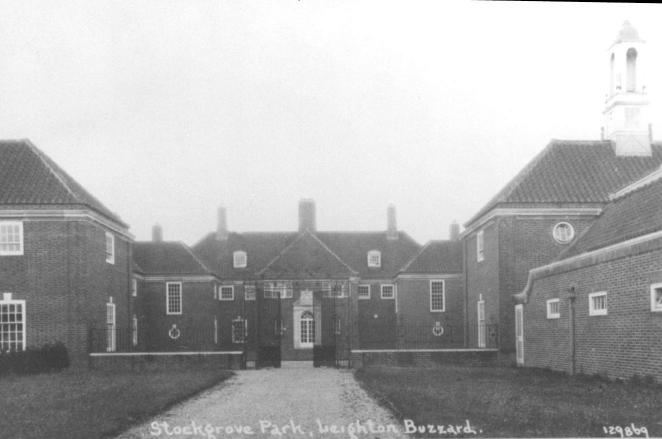
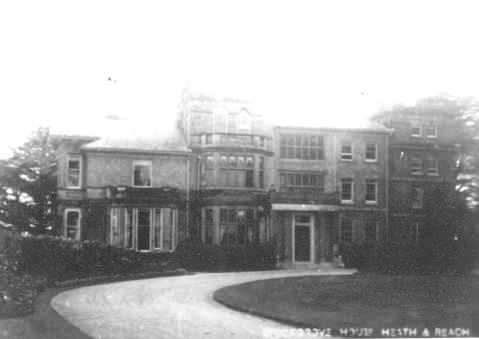
View from the north c1910
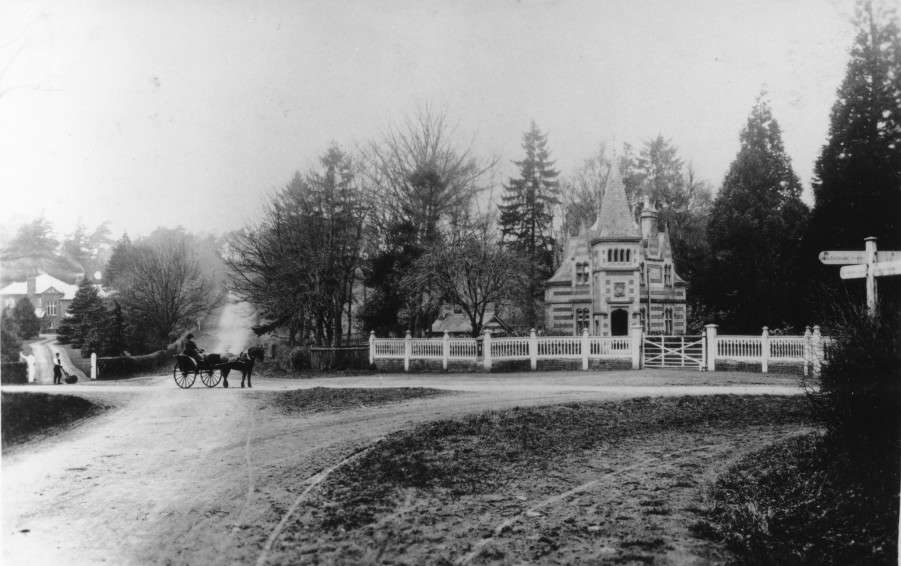
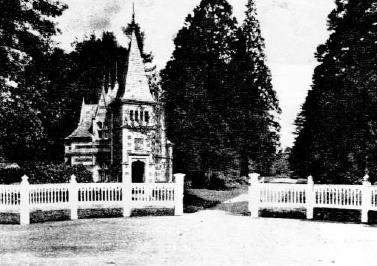
Picket Lodge (South entrance) c1910
Click here to see maps of Stockgrove in 1924 and 1880
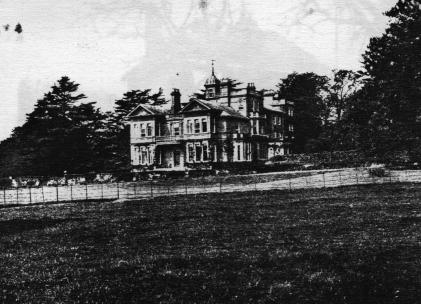
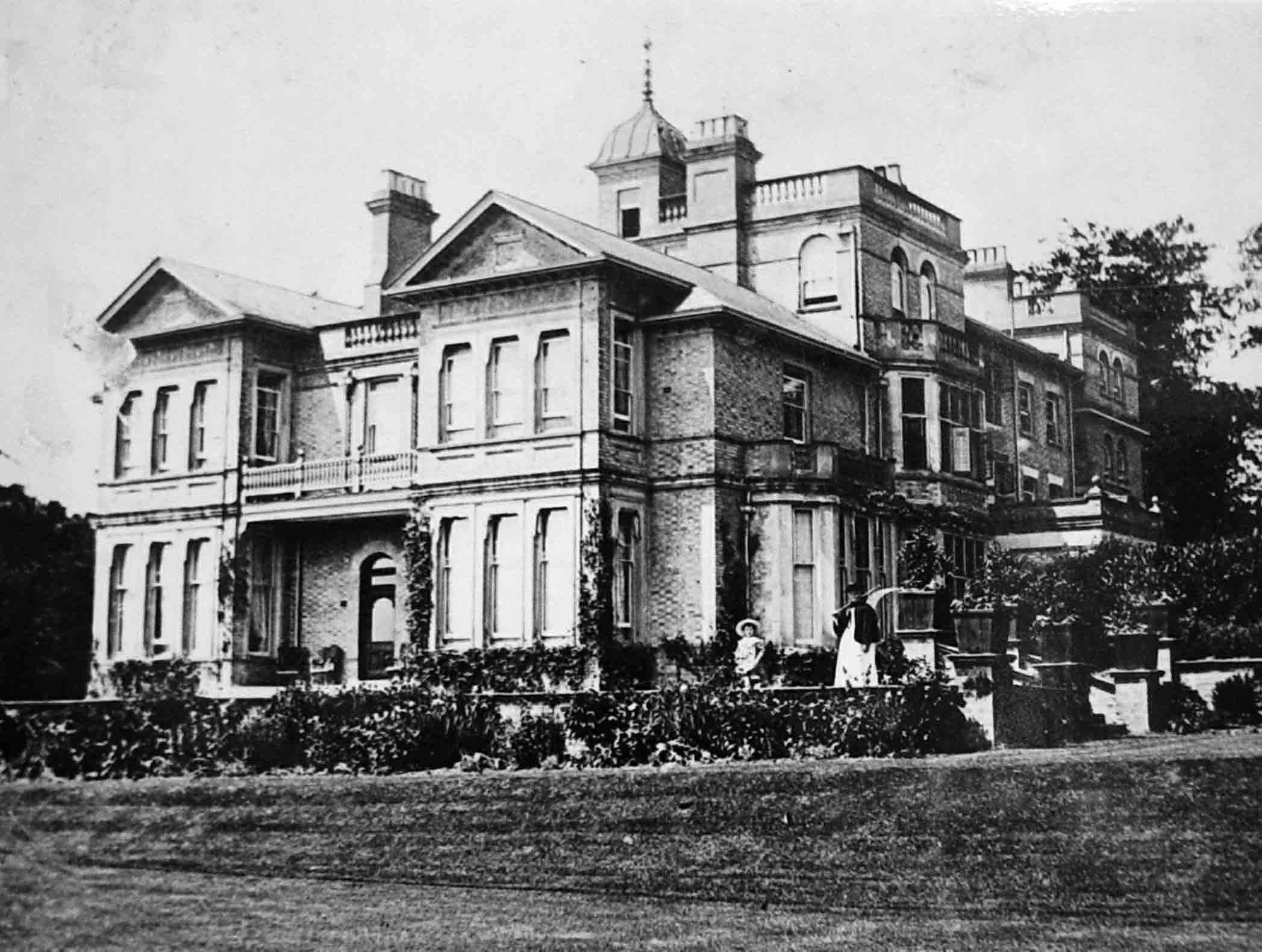
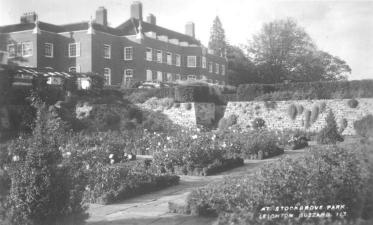
Stockgrove Park House originally looked like this:
|
|
|
| View from the south c1910 | Close-up c1910 |
|
|
|
|
View from the north c1910 |
Picket Lodge (South entrance) c1910 |
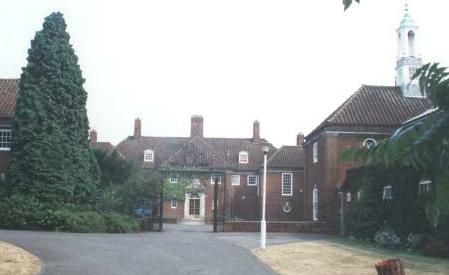
In the 1920s Sir Michael Kroyer-Kielberg KBE (1882-1958) commissioned the architect William Curtis-Green to design and build a new house and estate.
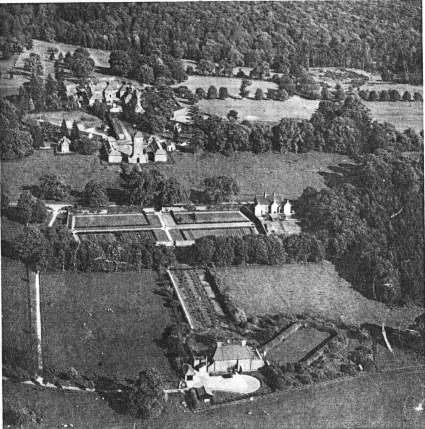
An aerial view (looking south east) of the new estate is shown below:
 |
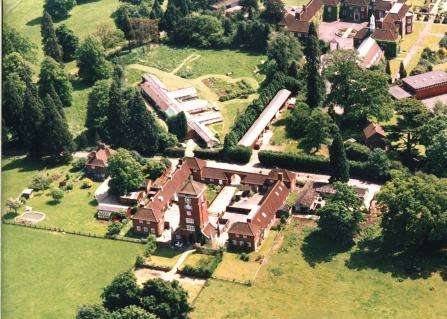 |
| Photograph believed to have been taken in the early 1950s | Stockgrove from the air in 1994 |
Various views of the replacement Stockgrove House:
|
|
|
|
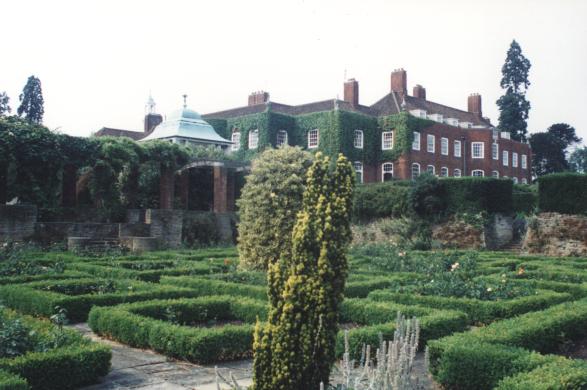
| View from the north | Same view | |
| Photograph believed taken in the 1940s | taken in 1994 | |
 |
 |
|
| View from the south | Same view | |
| Photograph believed taken in the 1940s | taken in 1994 |
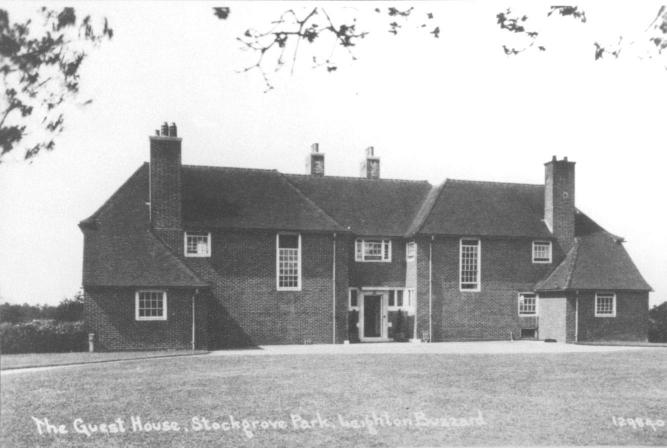
During the World War II the estate was occupied by the army, and the following photographs were taken by people stationed there at that time (1940s):
 |
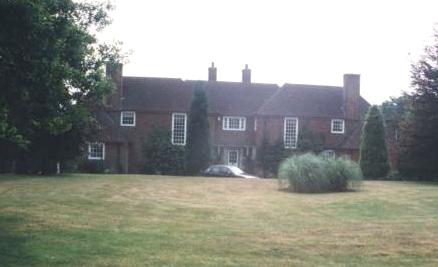 |
| Dower House c1940 | Dower House 1994 |
 |
 |
|
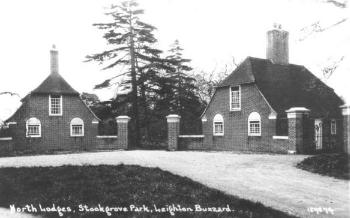
Northern entrance (North Lodges) c1940 |
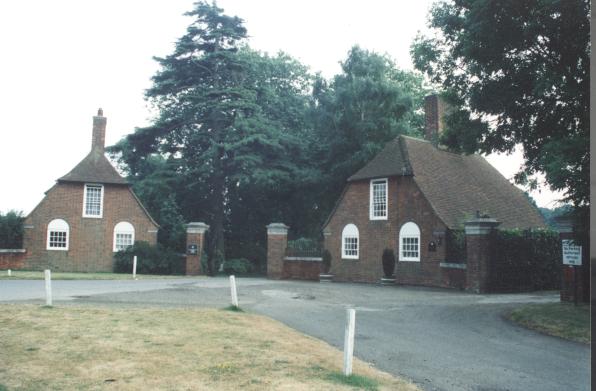
Northern entrance (North Lodges) c1994 |
 |
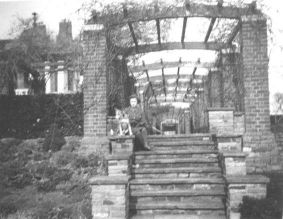 |
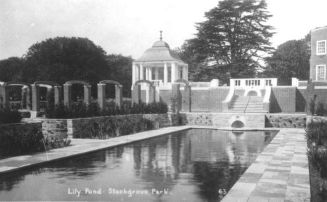
| The pond and gazebo | The pergola |
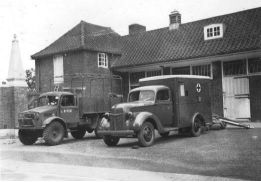 |
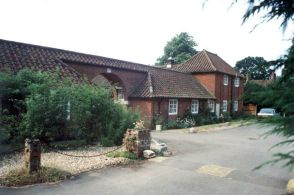 |
| Army vehicles in stable yard c1940 | Outside stable yard 1994 |
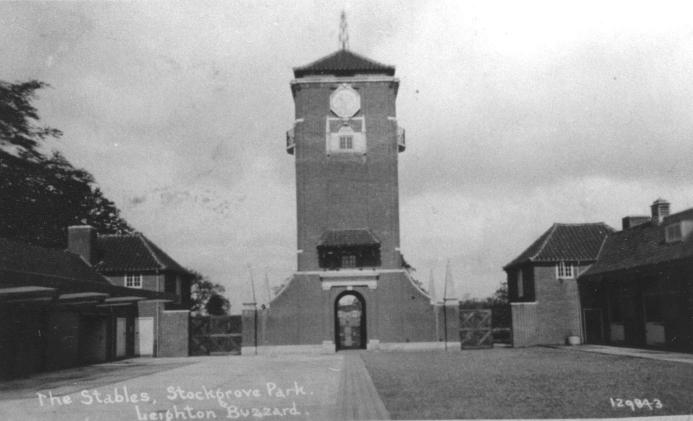 |
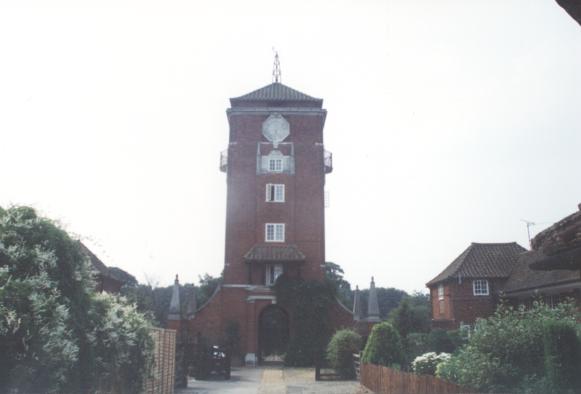 |
| The Clock Tower c 1940 (view from the courtyard) | The Clock Tower in 1994 (view from the courtyard) |
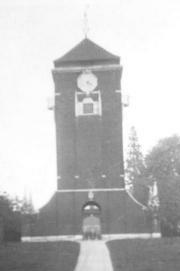 |
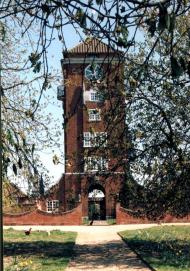 |
| The Clock Tower in c 1940 (view from the north-west) | The Clock Tower in 1994 (view from the north-west) |
 |
 |
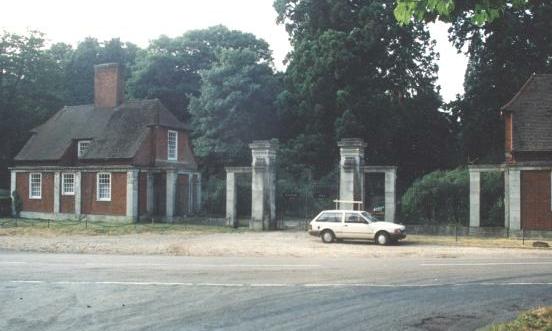 |
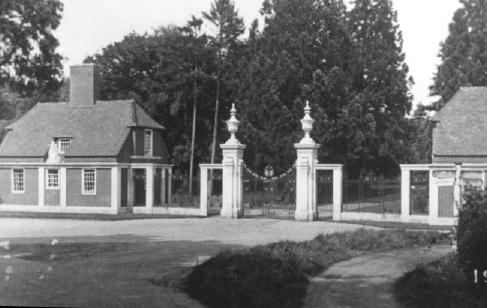
| Picket Lodge (southern gates) c1910 | Southern entrance gates c1940 | Southern entrance gates 1994 |
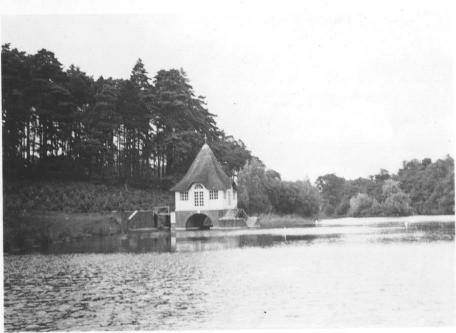 |
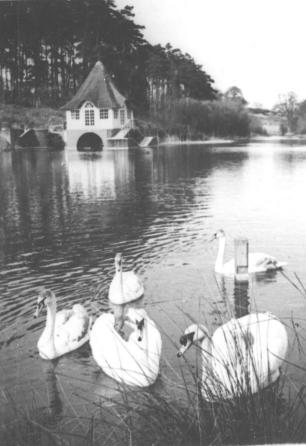 |
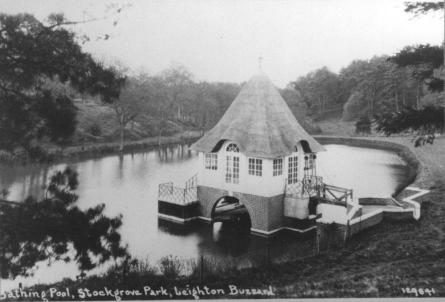 |
| Boathouse on the lake c1940 | Swans c1940 | Boathouse on the lake c1940 |
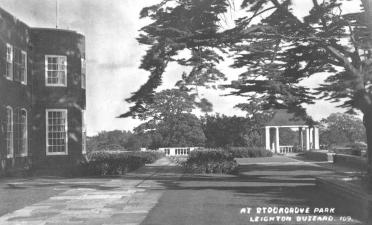 |
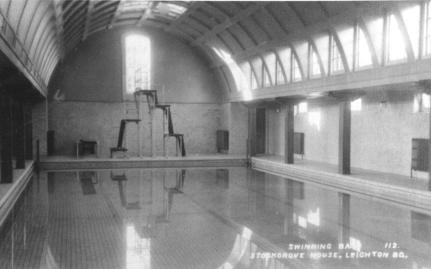 |
| Stockgrove house Gazebo c1940 | The swimming pool c1940 |
In January 2012 I received this email from Harold Simmons:
I don't know how old the website is, but I hope you may be interested to know, if you don't already, that a Territorial Army Casualty Clearing Station, the 1st (1st London) CCS arrived at Stockgrove Park in three coaches fom the Duke of York's HQ in Chelsea at around 1 am on Saturday 2nd September 1939. I was a private soldier in that unit under the command of Lt Col Tristram Samuel. On the Sunday when was was declared the unit's name was changed to No. 10 CCS to avoid possible confusion with No 1 Regular Army CCS based at the time at Aldershot. Sir Michael Kielberg and his family had almost completed their move to the Dower or Guest House by that time. Waring and Gillow were doing all the packing.
10 CCS went to France at the end of January 1940. I was left behind with severe tonsillitis and was joined a few days later by Lt Col O.C. Link, who had recently returned to the UK from Hong Kong. I was fortunate to be promoted rapidly to help form up Nos 12, 18 and 22 CCSs, finishing with the rank of WOII before going to India and Burma with 22 at the beginning of December 1941. The RAMC had been moved to Heath House, Plantation Road and replaced at Stockgrove by commandos some months before that.
10, 12 and 18 CCS s were all overrun by the Germans and, I believe, taken to Stalag 8B in Silesia for the rest of the war.
I shall be 92 on 1 June next (2012).
Yours sincerely
Harold Simmonds
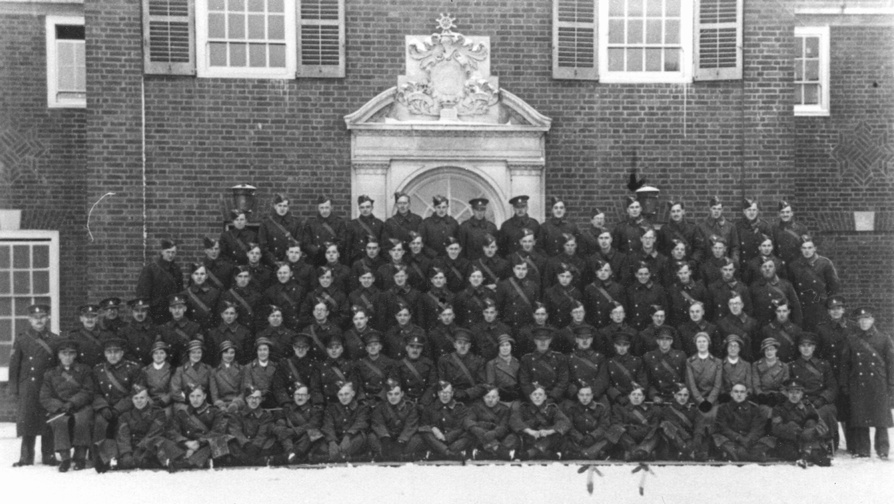
In the Bedfordshire archives there is an account by Grace Howell of a secret meeting of eleven Generals in a cottage in Stockwood Park c. 1941. This is almost certainly Stockgrove Park for many reasons, particularly as Bletchley Park code-breakers were stationed at Stockgrove House and also the Duncombe Arms in Great Brickhill. Click the heading to go straight to the article.
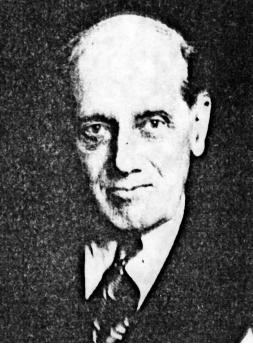
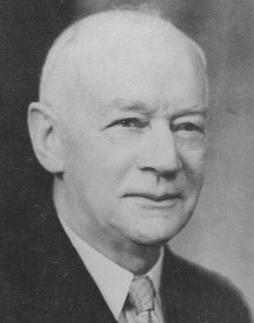
Born Alton, Hants, 16
July 1875
Died
London, 26 March 1960.

English architect and water colourist
After studying
engineering and architecture, he was articled to John Belcher. He then entered
the Royal Academy schools in London and won the Bidlake Gold Medal and a
travelling studentship. After extensive study tours of Spain and Italy
developing his drawing skills, he returned to England in 1897. For a short
period he was employed as draughtsman for The Builder before setting up his own
practice in 1898. Initial commissions included a number of structures for power
stations, for example Bristol Tramways Power Station (1898–9) and Chiswick
(1904; destr.), which he designed in a classical style. He acquired a reputation
for houses and contributed designs to Hampstead Garden Suburb (from 1905),
Letchworth Garden City (from 1902) and municipal housing at Winchester (1919).
In 1917 he became a partner in the firm of Dunn & Watson, and his work in
the 1920s and 1930s was much concerned with large, mostly classically inspired
office developments. He also designed a number of branches for Lloyds Bank and
Barclays Bank (e.g. one in Piccadilly, London, 1922). His Wolseley House and
showrooms (1921) for the Wolseley Motor Co. at 160 Piccadilly, London, won the
first RIBA medal for street architecture in 1922. His largest project (1930) was
the Dorchester Hotel, Park Lane, London, where he added coy Art Deco detail to
the advanced reinforced-concrete structure designed by Owen Williams as well as
radically altering the interior decoration. He was president of the
Architectural Association (1913–14), vice-president of the RIBA (1923–4) and
was elected a Royal Academician in 1933.
In 1929 he started
work on Stockgrove Park estate for Sir Michael Kroyer-Kielberg,
this work was completed in 1938.
An accomplished watercolourist, he exhibited repeatedly at the RA summer exhibitions and published collections of his drawings
Information taken
from: http://www.artnet.com/library/03/0347/T034766.asp
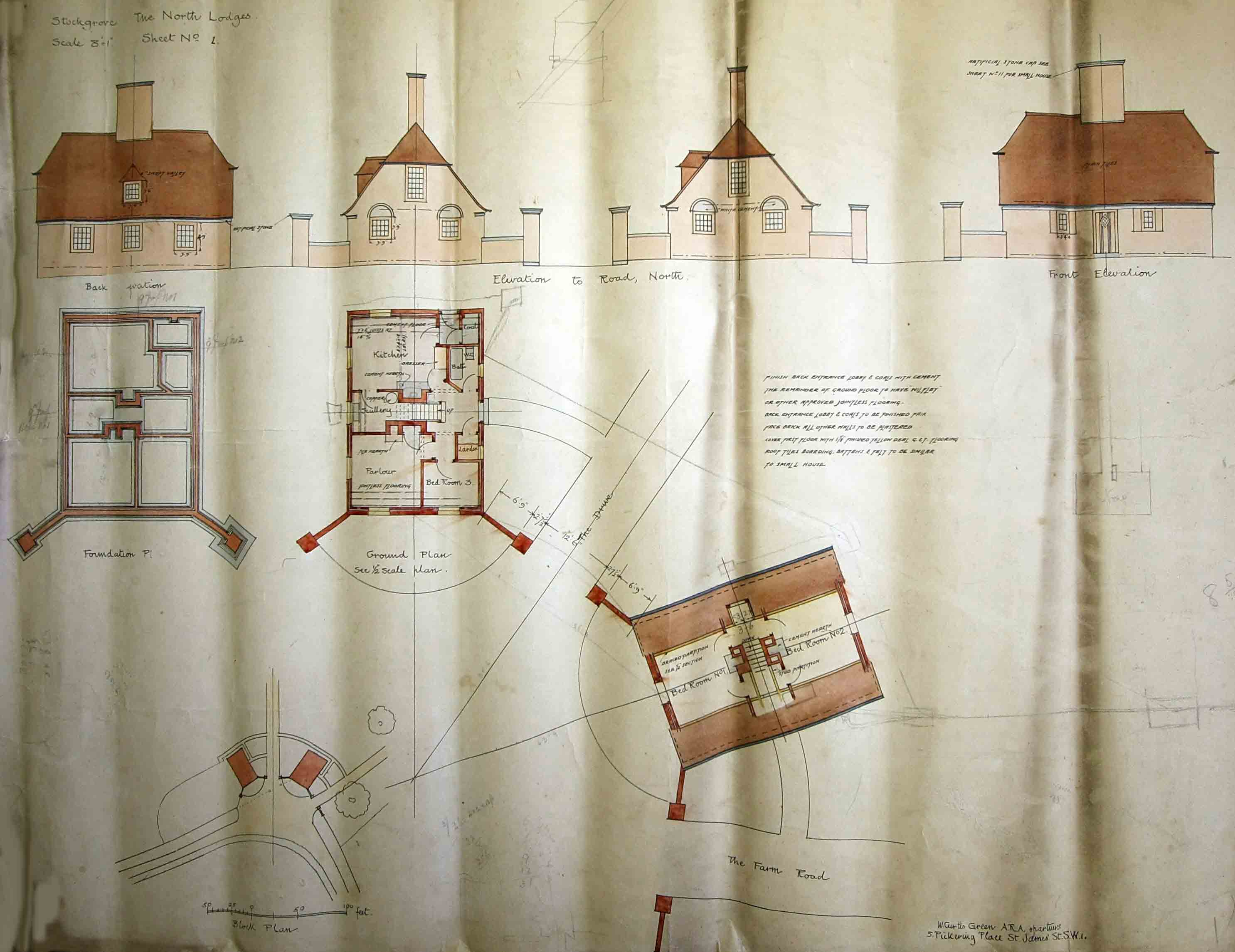
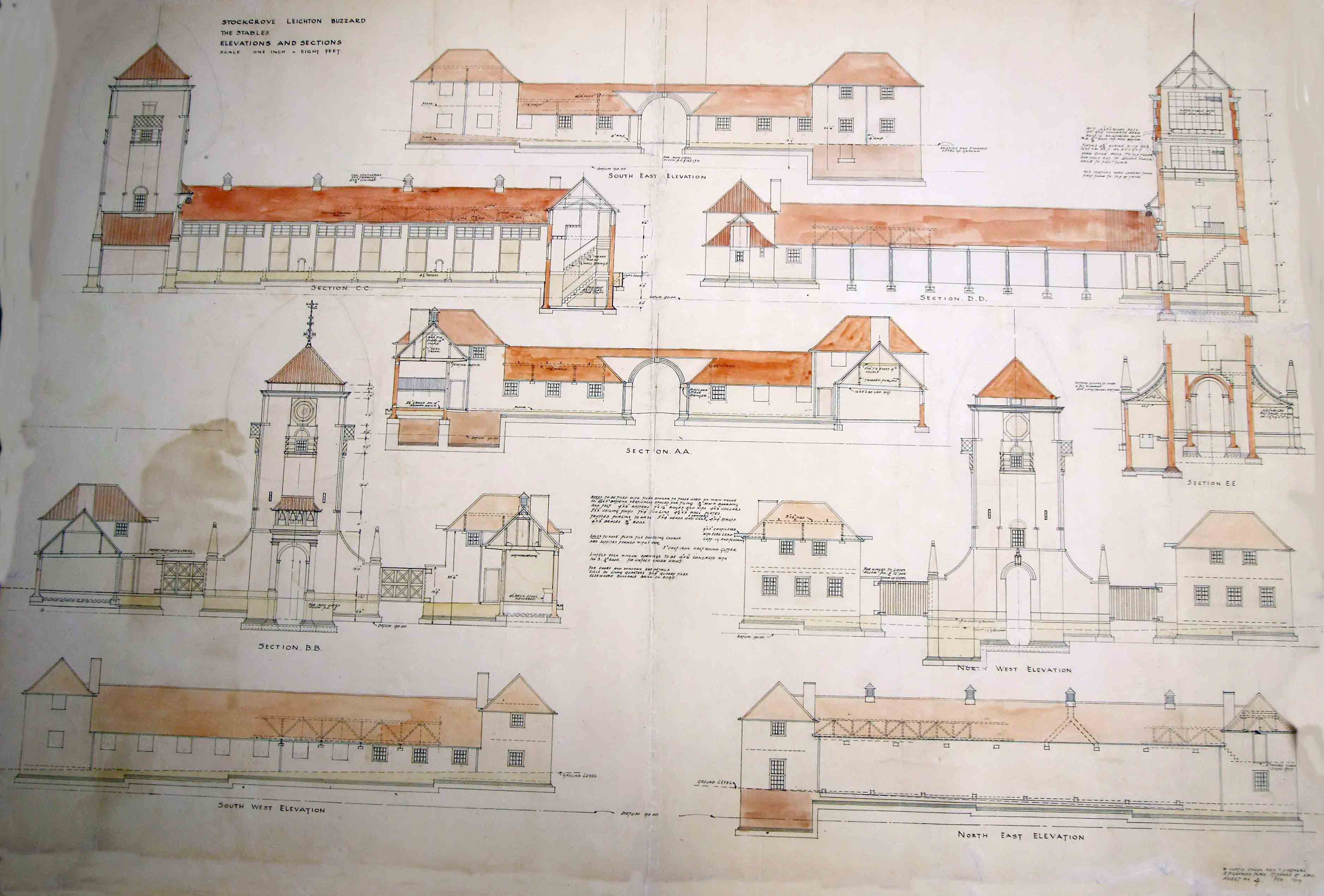
Kroyer-Kielberg commissioned William Curtis Green to design the replacement
Stockgrove Estate
He lived at Brook House, Park Lane, London W.l. and also at 9-5 Orchard Court,
Portman Square, London, W.l
He died on 19 May 1958 this date at 9-5 Orchard Court, Portman Square, London,
W.l.
For more information contact: Sheridan Williams at: stockgrove@clock-tower.com